
Dates: 30.06.2025 – 02.07.2025
Venue: Scuola di Economia e Studi Aziendali – Roma Tre, Roma
The 18th EAEPE Summer School explores migration through a pluralist, heterodox lens, offering a space to engage critically with the mainstream of models of migration economics. It examines migration as a complex, multidimensional process shaped by structural, historical, and cultural forces. Here, participants will have the opportunity to learn from renowned scholars in the field and receive feedback on their work.
Speakers

Roberto Basile
Università degli Studi di Roma “La Sapienza”

Merve Burnazoglu
Utrecht University – School of Economics

Elena Giacomelli
Università di Bologna and Columbia University

Cristina Giudici
Università degli Studi di Roma “La Sapienza”
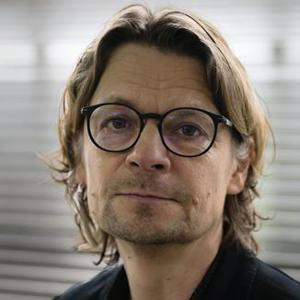
Peo Hansen
Linköping University

Rama Dasi Mariani
Università degli studi Roma Tre
Description:
People have always moved—between rural and urban areas, across borders, within regions, and across continents—shaping and reshaping economic, cultural, and psychological landscapes. Current political debates often frame migration as a new crisis threatening Western industrialised nations, focusing narrowly on movements from colonised countries to the so-called Global North as if these flows were the entirety of migration. Migration is a multifaceted phenomenon that can be read as driven by individual motivations, imperial or capitalist institutions, or by cultural processes, but clearly never understood through a single perspective.
People might move to search for opportunities, or because they are forcibly displaced due to war, political instability, and environmental pressures. People from the capitalist core might move to the periphery as expats in a legitimised role, while others move illegally through borders made of barbed wire and salt. Capitalist labour demands funnel many into low-wage, precarious work in places that seem to be more focused on value-creation than on societal and human needs. Stratification dynamics create new and reproduce old racialised, gender, or class groups, with new marginalizations and inequalities. Migration might open new hopes of cooperation and development where it is least expected. Together, these forces form a complex, evolving network that continues to redefine societies, economies, and identities worldwide.
However, mainstream economics often reduces migration to a simplistic question of labour supply and individual utility maximisation. Neoclassical models generally portray migrants as rational actors responding to market signals, thereby ignoring broader structural influences and the diversity of motivations behind migration. Scholars from all schools of social sciences have critiqued this approach, arguing that it fails to account for power imbalances, historical inequalities, and the role of social and environmental factors in migration.
In response, the Summer School offers a pluralistic approach that draws on heterodox economics and interdisciplinary perspectives, aiming to equip participants with tools to analyse migration in its full complexity. This approach considers this phenomenon as a process embedded within a broader network of forces—economic, social, ecological, and historical—that interact dynamically and shape global patterns. Rather than viewing migration through isolated “push” and “pull” factors, we emphasise its role within interconnected systems. Participants will explore diverse perspectives, including the impact of institutional and structural dynamics, the political economy of global labour markets, ecological pressures, social and cultural networks, and the historical legacies of colonialism.
Through these lenses, we aim to build a richer, more nuanced understanding of migration in economics that challenges simplistic economistic narratives and captures the complex reality of global movement. The Summer School is Co-Organised with the European Association for Evolutionary Political Economy (EAEPE) to connect with established heterodox scholars and rather than one-directional teaching we want to co-develop new ideas with PhD Students by using workshop formats and non-formal education methods.
Participation
The 18th EAEPE Summer School is open to PhD students and early-career researchers working in particular in the field of institutional and evolutionary analysis, but is not limited to those approaches. Lecturers will address the topic of migration from different perspectives and approaches. Many Research Areas are relevant: Social Economics, Public Economics, Migration Economics,Development Economics, Macroeconomics, Labour Economics, Urban and Regional Economics, Economic History, Evolutionary Economics, Comparative Economics, and the impact of migration on Innovation and Industrial Policy.
More generally, contributions from all fields using institutional, evolutionary, multidisciplinary approaches are welcome. Lectures by internationally renowned scholars will be given in the morning, while afternoons will be devoted to presentations by advanced PhD students and early-career researchers, who will thus benefit from comments and suggestions from experts in the field. Selected participants volunteer to discuss the work of peers.
There are not fees for participation, lunch will be provided. Participants are requested to be EAEPE members. For PhD students and those with a gross personal income less than 10,000€ per year a Special Rate Membership is available, at the price of 25€. More information here.
Scientific and Organising Committee:
- Pasquale Tridico (Roma Tre University)
- Enrico Sergio Levrero (Roma Tre University)
- Sebastiano Fadda (Roma Tre University)
- Federica Arena (Roma Tre University)
- Jakob Nitschke (Sapienza University of Rome)
- Walter Paternesi Meloni (Sapienza University of Rome)
- Vincenzo Pistucci (Roma Tre University)
- Luigi Salvati (Università Telematica Pegaso)
This Summer School is co-founded by the Young Scholars Initiative and you can find the call also on their website: Here
If you would like to get in contact with the organisers send an email to: [email protected]
To apply for a spot as a listener, apply here: